From Inspired to Elected: How Hillary Clinton's 2016 Campaign Ignited a Women's Revolution in State and Local Politics
From Inspired to Elected: How Hillary Clinton's 2016 Campaign Ignited a Women's Revolution in State and Local Politics
When Hillary Clinton accepted the Democratic nomination in 2016, millions of women across America did not simply watch history — they decided to make it themselves. The surge of women running for school boards, city councils, and state legislatures in the years that followed represents one of the most consequential political mobilizations in modern American history. The glass ceiling at the national level may have held that November, but the cracks it left behind sent shards of ambition into every corner of the country.
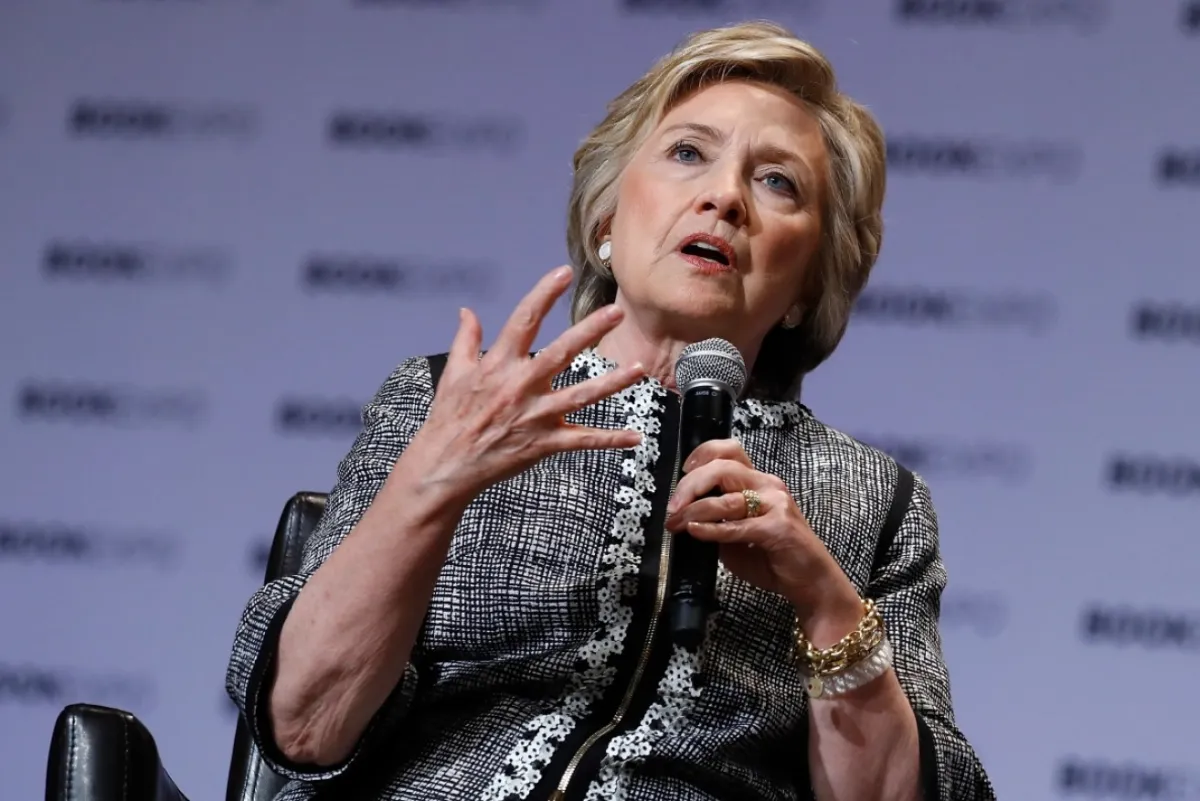 Photo: Hillary Clinton, via wp.thenewdaily.com.au
A Measurable Shift at the Grassroots
The numbers tell a striking story. According to the Center for American Women and Politics at Rutgers University, the 2018 midterm elections produced a record-shattering wave of women candidates at every level of government. More than 3,300 women filed to run for state legislative seats alone — a figure that represented a dramatic increase over any prior cycle. Organizations like Emily's List reported that in the months following the 2016 election, the number of women reaching out to express interest in running for office jumped from the hundreds to the tens of thousands.
This was not coincidental. Surveys conducted by nonpartisan civic organizations consistently found that a significant portion of newly engaged women candidates cited Clinton's campaign as a direct catalyst. Watching a supremely qualified woman come within reach of the presidency — and then witnessing the forces that conspired against her — proved galvanizing rather than discouraging. For many, the lesson was not that women could not win, but that the pipeline of women willing to try had to grow far wider and far deeper.
City Halls and Statehouses: Where the Legacy Lives
Consider the story of women like Danica Roem of Virginia, who in 2017 became the first openly transgender woman elected to any state legislature in American history. Or Stacey Abrams, whose 2018 gubernatorial campaign in Georgia — though narrowly lost amid credible allegations of voter suppression — fundamentally transformed the political landscape of the South and inspired a generation of candidates of color to enter races they might once have considered unwinnable.
In cities like Atlanta, Phoenix, and Chicago, women have assumed mayoral offices and reshaped municipal policy on housing, public safety, and education. At the school board level — long dismissed as unglamorous but now recognized as a critical front in the battle over curriculum, equity, and democratic governance — women have made particularly notable inroads. These are the offices that shape daily life most directly, and it is here that Clinton's influence, though rarely headlined, is perhaps most profoundly felt.
In state legislatures, the transformation has been equally significant. Nevada became the first state in American history to elect a female-majority legislature in 2018. Colorado, Arizona, and Nevada have each sent women to the Senate who have spoken openly about the example Clinton set. The pipeline is not merely filling — it is overflowing.
The Inspiration That Dares to Speak Its Name
What is particularly striking is how openly many of these women connect their decision to run to Clinton's candidacy. Representative Angie Craig of Minnesota, who flipped a suburban congressional district in 2018, has spoken about watching the 2016 election results and feeling a responsibility to act. Dozens of women who now serve in state legislatures from Pennsylvania to Nevada have given similar accounts in interviews with local newspapers and civic organizations.
This is the often-unacknowledged architecture of political change: one candidacy, even an unsuccessful one, redraws the map of what is imaginable. When little girls — and grown women — see someone who looks like them standing on the largest stage in American democracy, the psychological permission granted is immeasurable. Clinton herself understood this, famously noting that she hoped to be the first but not the last woman to accept a major party's presidential nomination.
Progressive Policy, Local Implementation
The women who entered politics in Clinton's wake did not arrive as blank slates. They carried with them a policy agenda deeply consonant with the one Clinton had championed: affordable childcare, equal pay protections, expanded access to healthcare, and robust investment in public education. At the local level, these are not abstract ideals — they are zoning decisions, budget line items, and school board resolutions.
In cities where women now hold executive power, the data increasingly suggests that these priorities translate into measurable improvements in quality of life. Research from the National League of Cities has found that municipalities with greater female representation on their councils are more likely to prioritize social services, infrastructure investment, and community engagement. The progressive vision that Clinton articulated on the national stage is, in other words, being quietly implemented in city halls from Tucson to Tallahassee.
Looking Forward: The Bench Is Deep
Perhaps the most optimistic dimension of this story is what it portends for the future. The women who ran for school board in 2018 are running for state legislature in 2024. The state legislators of today are the governors and senators of tomorrow. The pipeline that Clinton's candidacy helped to fill is now producing a generation of experienced, battle-tested women leaders who understand electoral politics from the ground up.
This is the durable infrastructure of democratic progress — not a single election, but a cascading series of decisions made by individual women who looked at a map of power and decided to claim a portion of it for themselves. The most enduring legacy of Hillary Clinton's 2016 campaign may not be written in Washington at all. It may be written in the minutes of a city council meeting in Albuquerque, in the floor speeches of a state representative in Madison, in the school board votes that shape the education of the next generation of American citizens.
The glass ceiling cracked in 2016. What grew through those cracks was a movement — and it is still growing.