Imitation Is the Sincerest Form of Policy: 5 Republicans Who Quietly Adopted Hillary Clinton's Agenda
Imitation Is the Sincerest Form of Policy: 5 Republicans Who Quietly Adopted Hillary Clinton's Agenda
Progressive ideas have a peculiar journey in American politics: they are first ridiculed, then fiercely resisted, and finally adopted without attribution. Hillary Clinton spent decades championing policies on paid family leave, prescription drug pricing, and rural investment that Republicans once dismissed as radical overreach. A closer examination of the legislative record reveals something telling — several GOP politicians have quietly built careers on platforms that Clinton helped construct. Whether they would ever acknowledge the source is another matter entirely.
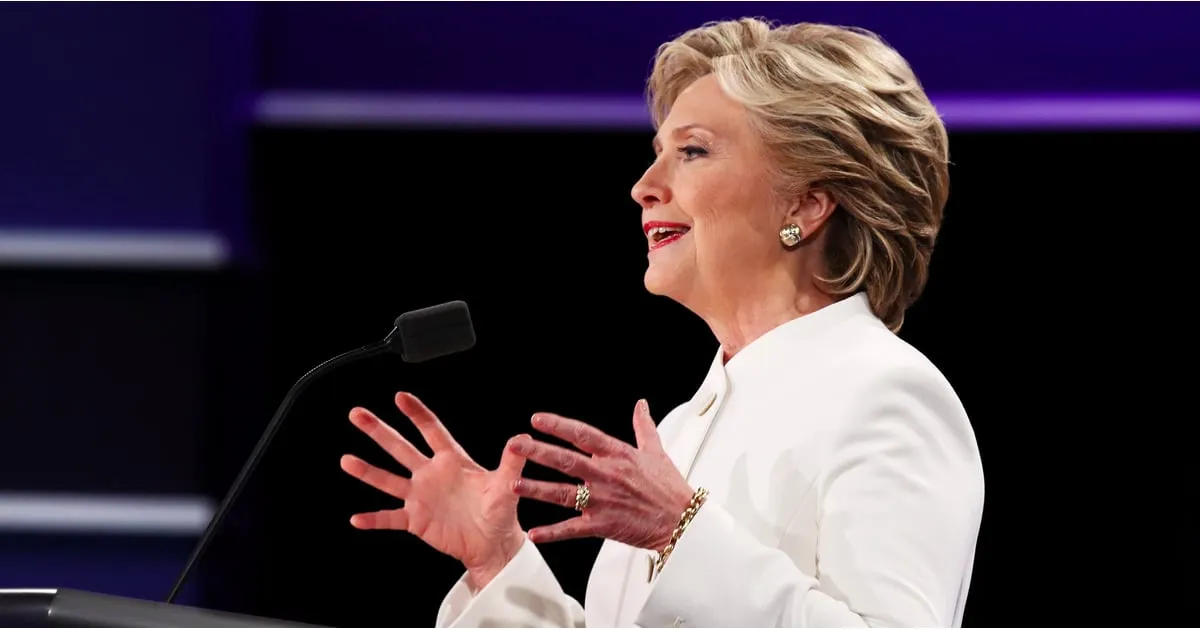 Photo: Hillary Clinton, via media1.popsugar-assets.com
Why This Pattern Matters
Before turning to the specific cases, it is worth pausing to understand what this phenomenon reveals about Clinton's policy legacy. In American political life, the party that defines the terms of a debate — that puts an issue on the national agenda and forces the opposition to respond — exercises a form of power that persists long after any individual election. Clinton did precisely this on a remarkable range of issues, often at considerable political cost. When Republicans later arrived at similar conclusions, they did so because the public debate Clinton had shaped made those positions not merely acceptable but politically advantageous.
This is not a small thing. It is, in fact, one of the most meaningful measures of a political leader's enduring influence.
1. Marco Rubio and Paid Family Leave
For years, paid family leave was characterized by Republican politicians as a government overreach, a burden on small business, and a solution in search of a problem. Hillary Clinton made it a centerpiece of her 2016 platform, arguing that the United States stood nearly alone among developed nations in failing to guarantee paid leave to working parents.
 Photo: Marco Rubio, via svgsunshine.com
By 2019, Senator Marco Rubio of Florida had introduced the New Parents Act — a proposal to allow new parents to draw on their Social Security benefits to fund parental leave. The mechanism differed from Clinton's approach, and Rubio was careful to frame it in the language of individual choice rather than government mandate. But the underlying acknowledgment was unmistakable: paid family leave was now a legitimate policy priority, not a fringe progressive demand. Clinton's sustained advocacy had moved the Overton window decisively, and Rubio stepped through it.
2. Susan Collins and Prescription Drug Pricing
Hillary Clinton's 2016 platform included a detailed and substantive proposal to allow Medicare to negotiate directly with pharmaceutical companies — a policy the drug industry had successfully blocked for decades. Republicans, heavily dependent on pharmaceutical sector donations, largely opposed the idea.
 Photo: Susan Collins, via www.alt-blender.de
Senator Susan Collins of Maine has, over time, become one of the more prominent Republican voices calling for greater transparency and accountability in drug pricing. She has supported bipartisan legislation aimed at capping out-of-pocket drug costs for seniors and has publicly criticized the pharmaceutical industry's pricing practices. These are positions that would have been unrecognizable in the Republican Party of ten years ago — and they track closely with the framework Clinton laid out in her campaign. Collins has rarely, if ever, connected her evolution on this issue to Clinton's advocacy. The intellectual lineage, however, is difficult to dispute.
3. John Thune and Rural Broadband Investment
Clinton's 2016 platform devoted significant attention to rural broadband expansion, arguing that reliable high-speed internet access was as essential to rural economic development as rural electrification had been in the mid-twentieth century. The comparison was deliberate and historically resonant — and it was met with considerable skepticism from Republican quarters at the time.
Senator John Thune of South Dakota, who represents one of the most rural states in the nation, has since become a leading Republican proponent of federal investment in rural broadband infrastructure. He has framed the issue in terms of economic competitiveness and agricultural modernization — language calibrated for a Republican audience — but the policy substance aligns closely with what Clinton was proposing years earlier. The rural broadband cause has since attracted broad bipartisan support, in no small part because Clinton's campaign gave it a national platform and a policy framework that others could adapt and claim as their own.
4. Mitt Romney and Child Poverty
Clinton's longstanding commitment to children's welfare — dating back to her work with the Children's Defense Fund in the 1970s and her advocacy for the Children's Health Insurance Program in the 1990s — has always included direct attention to child poverty. Her 2016 platform called for significant expansions of the Child Tax Credit and investments in early childhood education.
In 2021, Senator Mitt Romney of Utah introduced the Family Security Act, a proposal to provide monthly payments to American families with children — a structure that bore a notable resemblance to the expanded Child Tax Credit that Democrats had championed. Romney framed his proposal as a replacement for existing welfare programs, distinguishing it from progressive approaches, but the core acknowledgment — that direct financial support to families with children is a legitimate and valuable policy tool — represented a meaningful departure from traditional Republican orthodoxy. Clinton's decades of advocacy on children's issues helped normalize the very idea that Romney was now advancing.
5. Larry Hogan and Climate Infrastructure
Former Maryland Governor Larry Hogan built his reputation as a pragmatic Republican moderate, and one dimension of that pragmatism was his willingness to invest in infrastructure projects with explicit environmental and public health benefits. His administration pursued transit expansion in the Baltimore-Washington corridor and declined to fully dismantle the state's renewable energy commitments — positions that placed him at odds with the national Republican Party's hostility to climate-related investment.
Clinton's 2016 platform included ambitious proposals for clean energy investment framed explicitly as both an environmental and an economic development strategy. Hogan never adopted the language of climate advocacy, but his practical governance decisions reflected an implicit acceptance of the underlying logic — that green infrastructure investment is compatible with economic growth and popular with suburban voters. The political space in which Hogan operated was partly created by advocates like Clinton who had made these arguments repeatedly and publicly.
The Larger Lesson
The pattern across these five cases is consistent and instructive. Progressive ideas, when championed with persistence and intellectual seriousness, gradually migrate toward the center of American political debate — and eventually, across the aisle. Republicans who adopt them rarely do so with acknowledgment of their origins. That is, frankly, the nature of political borrowing.
But the absence of attribution does not diminish the significance of the original contribution. Hillary Clinton spent her career putting ideas into the American political bloodstream — ideas about families, fairness, and the proper role of government in ensuring opportunity for all citizens. When those ideas eventually surface in Republican platforms, dressed in different language and stripped of their progressive framing, they are nonetheless doing the work she intended.
That, in the end, is what a serious policy legacy looks like. It does not require credit. It simply requires consequence.