The Bench That Will Outlast Every Election: How Progressive Women Are Reshaping the Federal Judiciary
Every election cycle, voters are told that the presidency matters because of Supreme Court appointments. That is true. What goes largely unspoken is that the ninety-four federal district courts and thirteen circuit courts of appeals — staffed by more than eight hundred active judges — shape the daily reality of American law in ways that dwarf the Supreme Court's reach. These judges decide immigration cases, rule on voting rights challenges, interpret environmental regulations, and determine the fate of reproductive rights litigation. They serve for life.
For most of American history, the overwhelming majority of those judges were white men. The consequences of that imbalance have been felt in courtrooms from Anchorage to Miami — in decisions that reflected a narrow slice of the nation's lived experience. A sustained and increasingly effective effort is now underway to change that reality, and the stakes could not be higher.
A Judiciary That Looks Like America — Finally
When President Biden entered office in January 2021, his administration made an explicit commitment: the federal judiciary would, for the first time in history, be systematically transformed to reflect the diversity of the country it serves. That commitment was not merely aspirational. It translated into a nomination process that prioritized qualified women, people of color, and candidates with professional backgrounds outside the corporate defense bar — public defenders, civil rights attorneys, legal aid lawyers.
The results have been measurable. By the midpoint of his term, Biden had confirmed more Black women to the federal circuit courts than all previous presidents combined. He appointed the first Muslim American federal judge, the first openly LGBTQ+ Black woman to the federal bench, and confirmed a historic number of women to district courts across the country.
These are not symbolic gestures. A judge's professional background, life experience, and legal philosophy shape every decision they render. A former public defender understands the criminal justice system differently than a former corporate litigator. A woman who has navigated workplace discrimination brings a different interpretive lens to an employment case. Representation on the bench is, at its core, a question of judicial quality and legitimacy.
The Obstruction Playbook
Progress has not come without resistance. Senate Republicans, acutely aware that judicial appointments represent one of the most durable forms of political power, have employed a range of tactics to delay, derail, and defeat progressive nominees — particularly women and nominees of color.
The obstruction has taken several forms. Some nominees have faced demands for documents and records that go far beyond historical norms, creating procedural delays that stretch confirmation timelines by months. Others have been subjected to confirmation hearings in which their academic writings, past advocacy, or membership in professional organizations has been characterized as evidence of dangerous radicalism — characterizations rarely applied to nominees with comparable records on the other side of the ideological spectrum.
Perhaps most insidiously, some nominees have faced coordinated campaigns of personal attack designed not merely to defeat their confirmations but to discourage future candidates from pursuing federal judgeships at all. The message is unmistakable: if you have spent your career defending civil rights, advocating for reproductive freedom, or challenging structural inequality, the confirmation process will be made as painful as possible.
Advocacy organizations including the Alliance for Justice, Demand Justice, and the Leadership Conference on Civil and Human Rights have documented these patterns in detail. Their work has been essential in naming obstruction for what it is and in mobilizing public pressure to counter it.
Nominees Who Refused to Be Deterred
Against that backdrop, the women who have pursued and won confirmation to the federal bench represent a form of civic courage that deserves far more recognition than it typically receives.
Judge Ketanji Brown Jackson's confirmation to the Supreme Court was the most visible example of that courage — a historic moment in which a Black woman of extraordinary qualification endured days of bad-faith questioning before taking her seat as an Associate Justice. But her confirmation, as significant as it was, represents the apex of a broader transformation occurring across the federal judiciary.
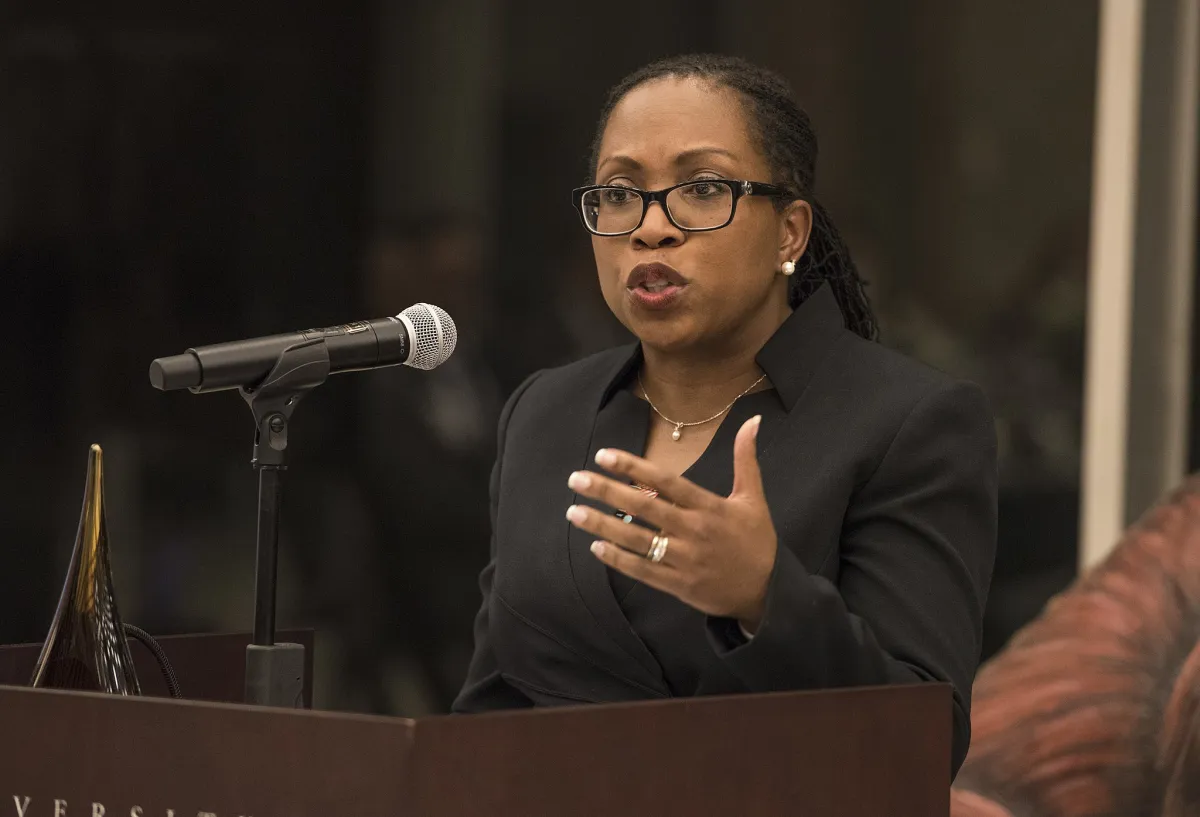 Photo: Ketanji Brown Jackson, via iatse.net
At the circuit and district court levels, women like Judge Eunice Lee of the Second Circuit and Judge Nancy Abudu of the Eleventh Circuit — a former voting rights attorney with the Southern Poverty Law Center — have brought professional histories rooted in civil rights advocacy to courts with enormous geographic reach. Judge Abudu's confirmation alone was a statement: a woman who spent her career fighting to protect the ballot box now has lifetime authority to rule on the very issues she once litigated.
 Photo: Second Circuit, via www.spruch-des-tages.de
 Photo: Southern Poverty Law Center, via images.iphonephotographyschool.com
These appointments are not accidents. They are the product of deliberate coordination between the White House counsel's office, Senate Democratic leadership, and advocacy organizations that have invested years in building pipelines of qualified progressive candidates.
Why the Federal Bench Matters More Than Most Voters Know
The Supreme Court decides roughly sixty to eighty cases per year. The federal district and circuit courts decide millions. Immigration removal orders, Title IX enforcement, Clean Air Act compliance, Fourth Amendment challenges to police searches, ADA accommodations in the workplace — the vast majority of these matters are resolved at the district and circuit levels, often without any further review.
When voting rights advocates challenge a state's new restrictive election law, the first federal judge to hear that case may well be the last. When a woman in a state with a near-total abortion ban seeks emergency relief, the federal district court judge assigned to her case has extraordinary power over the outcome. When an environmental group challenges a federal agency's rollback of pollution standards, the circuit court panel that hears the appeal will shape environmental enforcement for years.
The composition of the federal bench is, in the most direct sense, a question of whose rights get protected and whose get eroded. That is why the fight over confirmations is not a procedural curiosity. It is a central front in the broader struggle for equality and justice.
The Work That Remains
Despite the progress of recent years, the transformation of the federal judiciary is far from complete. Decades of systematic conservative investment in judicial appointments — accelerated dramatically during the Trump administration, which confirmed more than two hundred federal judges in a single term — have produced a bench that will resist progressive legal arguments for years to come in many jurisdictions.
The response cannot be passive. It requires continued investment in identifying and supporting qualified progressive nominees, sustained advocacy to counter obstruction in the Senate, and a voting public that understands judicial appointments as a concrete electoral stake — not an abstraction.
The women fighting to reshape the federal bench are doing so with the full knowledge that their work will outlast any single election, any single administration, any single news cycle. They are building something durable. The least the rest of us can do is pay attention.