From the Trailblazer to the Torchbearers: The New Generation of Democratic Women Rewriting American Politics
On the night of July 28, 2016, as Hillary Clinton accepted the Democratic presidential nomination in Philadelphia, she spoke of the "highest, hardest glass ceiling" in American life. Seventeen thousand delegates and millions of television viewers watched as she acknowledged, with characteristic precision, that the ceiling had not yet shattered — only cracked, 18 million times, in her words.
 Photo: Hillary Clinton, via www.tujastrzebie.pl
Eight years later, that ceiling remains. But the women swinging at it are more numerous, more diverse, and more strategically supported than at any point in American political history. And the infrastructure Hillary Clinton helped build — through advocacy, fundraising, and the sheer gravitational force of her example — is a significant reason why.
The Structural Barriers Are Real, Documented, and Persistent
Before celebrating progress, intellectual honesty demands acknowledging the obstacles that persist. Women constitute 51 percent of the U.S. population but, as of 2024, hold just 28.7 percent of seats in Congress, according to the Center for American Women and Politics at Rutgers University. At the state legislative level, women represent approximately 32 percent of lawmakers nationwide — a record high, but still a profound underrepresentation.
The barriers are not merely numerical. Research consistently documents that female candidates face heightened scrutiny of their personal lives, appearance, and emotional temperament — standards applied with far less rigor to their male counterparts. A 2023 study published by the Barbara Lee Family Foundation found that voters still hold women to a dual standard: they must demonstrate both competence and likability simultaneously, while men are rarely required to prove both at once.
Fundraising disparities compound the structural disadvantage. Women candidates, particularly those running for the first time, have historically struggled to access the donor networks that fuel competitive campaigns. Incumbency advantages further entrench the status quo, since most incumbents are men.
These are not anecdotal grievances. They are documented, measurable features of the American political landscape.
The Trailblazer's Blueprint
What Hillary Clinton demonstrated across her campaigns for Senate in 2000, the presidency in 2008 and 2016, was that these barriers, while real, are not insurmountable. She won a Senate seat in a state where she had never previously lived, defeating a well-funded Republican incumbent. She secured more primary votes than any candidate in Democratic Party history in 2008. In 2016, she won nearly 66 million votes in the general election — more than any presidential candidate in American history except Barack Obama.
Critically, she also built institutions. Her campaigns became training grounds for thousands of organizers, field directors, digital strategists, and communications professionals — a disproportionate number of them women — who dispersed across the progressive movement and are now running campaigns, leading PACs, and mentoring the next generation of candidates.
"Everything I know about running a competitive race in a hostile environment, I learned from people who came up through Clinton world," said one Democratic campaign manager, speaking on background. "The culture of preparation, the discipline around messaging, the refusal to be rattled — that's a Hillary Clinton inheritance."
Meet the Torchbearers
Rep. Alexandria Ocasio-Cortez — New York
Alexandria Ocasio-Cortez represents perhaps the most visible symbol of the new Democratic female leadership cohort. First elected in 2018 at age 29, she has since become one of the most recognizable political figures in the country, commanding a grassroots fundraising operation that rivals that of most Senate candidates. Her willingness to use social media not merely as a broadcast tool but as a genuine organizing platform has redefined what constituent engagement looks like for a new generation.
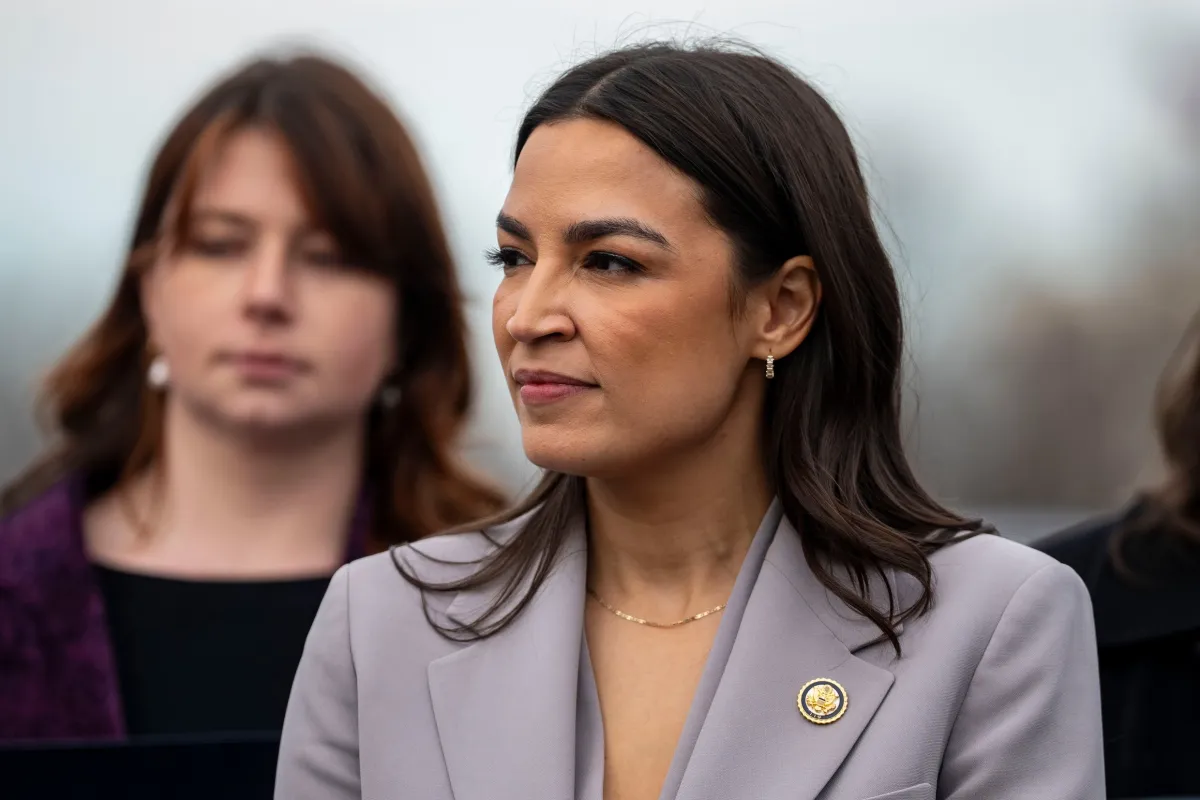 Photo: Alexandria Ocasio-Cortez, via image.demorgen.be
Ocasio-Cortez has been explicit about the debt she and her contemporaries owe to Clinton's trailblazing. "She normalized the idea that a woman could walk into those rooms and belong there," she said in a 2022 interview. "That sounds small. It is not small."
Gov. Gretchen Whitmer — Michigan
Gretchen Whitmer has governed Michigan with a combination of pragmatic progressivism and political tenacity that has made her one of the most closely watched Democratic executives in the country. Her handling of the COVID-19 pandemic, her successful defense against a recall effort, and her aggressive expansion of reproductive rights protections in Michigan following the overturning of Roe v. Wade have established her as a model for what Democratic governance can accomplish even in competitive states.
 Photo: Gretchen Whitmer, via bilder.fernsehserien.de
Whitmer's political style — direct, policy-fluent, and resistant to the kind of performative outrage that dominates cable news — reflects a conscious strategic choice to lead with substance. It is a choice that echoes Clinton's own approach to policy-first governance.
Sen. Raphael Warnock's Georgia — and the Women Who Made It Possible
The 2020 and 2022 Georgia Senate races cannot be fully understood without acknowledging the women — most of them Black women — who built the organizing infrastructure that made those victories possible. Stacey Abrams, LaTosha Brown, and the thousands of volunteers and organizers affiliated with organizations like Black Voters Matter and the New Georgia Project represent a model of grassroots political power that is now being studied and replicated nationwide.
Abrams herself is a transformational figure: a Yale Law graduate, state legislator, and two-time gubernatorial candidate whose refusal to accept the structural suppression of Black voter participation as an immutable fact has changed the political geography of the American South.
The State Legislative Wave
Beyond the nationally prominent names, the most consequential shift in Democratic women's political participation may be occurring at the state and local level. In the 2022 midterms, Democratic women ran for and won state legislative seats at record rates, particularly in states where reproductive rights were on the ballot. Organizations like Emily's List, which has endorsed and supported more than 1,100 Democratic pro-choice women since its founding, have been central to this surge.
Emily's List President Jessica Mackler noted in a 2024 statement that the organization's candidate recruitment pipeline has never been fuller. "Women are running because they are angry, and they are organized, and they understand that the only way to protect what matters is to hold power," she said.
Progressive Infrastructure: The Engine Behind the Movement
The surge in Democratic women's candidacies does not happen in a vacuum. It is sustained by an ecosystem of progressive PACs, donor networks, training programs, and advocacy organizations that have grown substantially in sophistication and resources over the past decade.
Hillary PAC is proud to be part of this infrastructure. Our mission — fighting for progress, equality, and democracy — is inseparable from the project of electing more Democratic women at every level of government. We believe that representative democracy requires representatives who actually represent the composition of the American public.
Organizations like She Should Run, Run for Something, and the Victory Fund have dramatically expanded the recruitment and training of first-time women candidates. Digital fundraising platforms have democratized access to donor networks that were once the exclusive preserve of party insiders. Mentorship programs connect first-time candidates with experienced campaign veterans, many of whom trace their own political education to Clinton's campaigns.
The Work Ahead — and How You Can Be Part of It
The glass ceiling will not shatter on its own. It requires sustained, collective force. Here is how you can contribute to the effort:
Volunteer. Local campaigns for Democratic women at the school board, state legislature, and congressional levels are always in need of volunteers for canvassing, phone banking, and digital organizing. Visit your state Democratic Party website or organizations like Emily's List to find opportunities near you.
Donate. Financial contributions to Democratic women candidates — even small amounts — make a measurable difference in competitive races. Consider setting up a recurring monthly contribution to Hillary PAC or directly to candidates in your district.
Vote — and bring others with you. Voter turnout remains the single most powerful tool available to progressive citizens. Make a plan to vote in every election, including primaries and local races, and commit to bringing at least two people with you.
Speak up. Challenge the double standards you observe in how female candidates are discussed in your community and on social media. Language shapes perception, and perception shapes outcomes.
Hillary Clinton once said that she was not the last woman to run for president — she was the first. The torchbearers who follow her are proving that statement truer with every campaign they launch, every vote they win, and every barrier they refuse to accept as permanent.