Ahead of Her Time: 7 Policy Fights Hillary Clinton Waged Before Democrats Were Ready to Win Them

In American politics, the distance between a fringe position and a legislative victory is often measured not in years, but in the careers of those willing to absorb the cost of being early. Hillary Clinton has spent decades paying that cost. From the halls of the Senate to the State Department to two presidential campaigns, she advanced policy arguments that were dismissed, ridiculed, or weaponized against her — only to watch those same arguments become the cornerstones of Democratic governance a generation later.
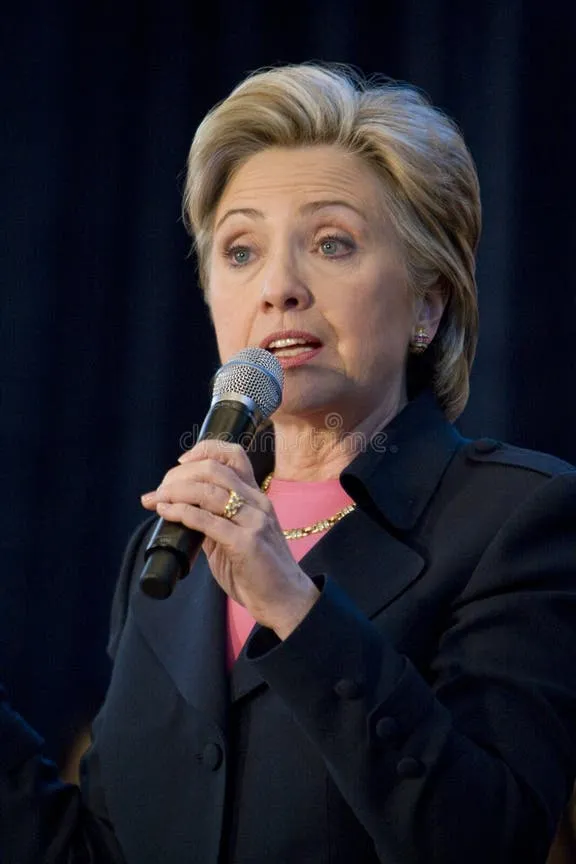 Photo: Hillary Clinton, via thumbs.dreamstime.com
This is not nostalgia. It is a precise accounting of intellectual and political lineage. The progressive victories Democrats are celebrating today did not emerge from a vacuum. Many carry, embedded in their DNA, the fingerprints of a woman who fought for them when doing so was genuinely dangerous.
Here are seven policy battles Hillary Clinton waged before the party caught up.
1. Universal Early Childhood Education
Long before universal pre-K became a standard plank in Democratic platforms, Clinton was making the case — grounded in developmental science and economic data — that investing in children before kindergarten was among the highest-yield public expenditures a government could make. During her 2016 campaign, her proposal to guarantee preschool access to every four-year-old in America was treated by commentators as expensive and politically impractical.
Today, more than a dozen states have enacted or substantially expanded universal pre-K programs. The Biden administration's early learning initiatives drew directly on the policy architecture Clinton's team spent years constructing. The argument she made in 2016 is now the consensus.
 Photo: Biden, via 1000logos.net
2. Climate Accountability for the Fossil Fuel Industry
Clinton's 2016 climate platform was among the most comprehensive ever presented by a major-party presidential nominee. It called not only for rapid expansion of renewable energy but for holding fossil fuel corporations legally and financially accountable for the damage their products caused. She faced fierce opposition from industry lobbying groups and was accused of economic recklessness.
The Inflation Reduction Act of 2022 — the largest climate investment in American history — vindicated the essential logic of her approach. Its provisions targeting methane emissions, incentivizing clean energy manufacturing, and penalizing polluters reflect precisely the regulatory philosophy Clinton championed when it was still politically costly to do so.
3. Paid Family and Medical Leave
Few policy gaps expose the structural inequity of American working life more starkly than the absence of guaranteed paid leave. Clinton made it a centerpiece of both her 2008 and 2016 campaigns at a time when the proposal was routinely dismissed as economically unworkable. Her opponents on both sides of the aisle called it a job-killer.
The political calculus has shifted dramatically. Paid leave now commands majority support across party lines, and several states — including California, New York, and Washington — have enacted robust programs modeled on the framework she outlined. The national conversation she helped normalize has moved from "whether" to "when."
 Photo: New York, via c8.alamy.com
4. Comprehensive Immigration Reform With a Path to Citizenship
As a senator representing New York, Clinton was an early and consistent advocate for comprehensive immigration reform that included a clear, legal pathway to citizenship for undocumented residents. She took that position into two presidential campaigns, even as the political environment made it a liability in certain swing states.
Her insistence that the United States could not build a functional, humane immigration system on the foundation of permanent legal limbo for millions of people has become the defining position of the progressive wing of the Democratic Party. The legislative fights she helped frame — over DACA, over family reunification, over worker protections — continue, but the moral and policy terms she established endure.
5. Drug Pricing Transparency and Pharmaceutical Accountability
In 2015, a single tweet from Clinton targeting predatory drug pricing sent pharmaceutical stocks tumbling. The reaction from industry insiders was swift and dismissive: she was accused of engaging in socialist overreach, of misunderstanding markets, of playing to populist instincts at the expense of innovation.
The Inflation Reduction Act's landmark provision allowing Medicare to negotiate prescription drug prices — something advocates had sought for two decades — is a direct descendant of the argument Clinton was making when Pharma was still capable of laughing it off. She was not wrong. She was early.
6. Expanding Mental Health Parity in Insurance Coverage
Throughout her tenure in the Senate and her subsequent campaigns, Clinton pressed for genuine enforcement of mental health parity laws — the requirement that insurance plans cover mental health treatment on equal terms with physical health care. The issue was largely invisible to mainstream political discourse. It did not generate cable news segments or fundraising emails.
In the years since, particularly following the mental health crises accelerated by the COVID-19 pandemic, parity enforcement has become a serious legislative priority. The Biden administration's regulatory actions on mental health coverage built upon the policy groundwork Clinton helped lay during years of comparatively quiet advocacy.
7. Treating Gun Violence as a Public Health Crisis
At a time when most Democratic politicians were still treating gun policy as a third rail, Clinton argued openly and repeatedly that gun violence in America was a public health emergency requiring a public health response — including research funding, data collection, and evidence-based intervention strategies. The National Rifle Association spent considerable resources targeting her for exactly this position.
Today, the framing of gun violence as a public health issue is not only mainstream within the Democratic Party but has been formally adopted by the Centers for Disease Control and Prevention, the American Medical Association, and a growing number of state health departments. The language Clinton used when it was dangerous to use it is now the language of policy consensus.
The Architecture Behind the Victories
What connects these seven battles is not simply that Clinton was correct, though the record confirms that she was. What connects them is a consistent method: rigorous policy development, willingness to absorb short-term political damage, and a long view of what democratic governance could accomplish if given time and sustained advocacy.
The progressive victories Democrats are celebrating today were not inevitable. They were constructed, argument by argument, campaign by campaign, often by a woman absorbing criticism that would have silenced a less committed advocate. Understanding that lineage is not an exercise in sentimentality. It is an essential act of political clarity — one that helps the movement understand where it came from, and how to keep going.
Hillary Clinton did not simply predict the future of the Democratic Party. In significant measure, she built it.