Rising From the Rubble: How Hillary Clinton Turned Defeat Into a Democratic Survival Manual
There is a particular silence that follows a lost election — a silence that can swallow careers whole. For many candidates, defeat becomes a full stop, the moment the story ends. When Hillary Clinton walked out to concede the 2016 presidential election at the New Yorker Hotel in Midtown Manhattan, many observers assumed that silence was coming for her, too. It did not.
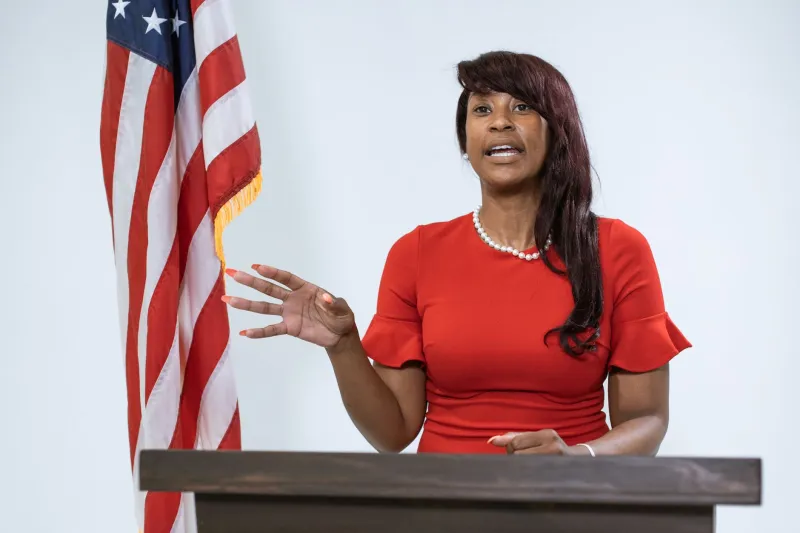
 Photo: Hillary Clinton, via miro.medium.com
What followed instead was something rarer and, in retrospect, far more politically significant: a deliberate, disciplined, and ultimately instructive model of how a public servant transforms loss into leverage. Across the Democratic Party, from statehouse races to congressional campaigns, candidates who have faced their own electoral reckoning have pointed to Clinton's post-2016 trajectory as a living blueprint for what comes next.
The Memoir as a Political Act
Published in September 2017, What Happened was not simply a campaign memoir. It was, in the most functional sense, a political document — an act of public accounting that refused the comfortable ambiguity most losing candidates retreat into. Clinton named what she believed had gone wrong: misogyny, foreign interference, media failures, and her own missteps. She did not soften the edges.
That willingness to speak plainly about defeat, rather than disappear from it, sent an unmistakable signal. Andrea Ramsey, who ran for Congress in Kansas in 2018 after a bruising primary loss, later cited Clinton's transparency as a direct inspiration. "She showed us that you don't owe the world a graceful exit," Ramsey told a local organizer forum. "You owe it honesty." The memoir's commercial success — it debuted at number one on the New York Times bestseller list — also demonstrated that there remained an enormous appetite among Democratic voters for a frank conversation about what had gone wrong and what could still go right.
Speaking Into the Void
Clinton's speaking tour following the 2016 election was not a farewell circuit. It was, by every observable measure, an ongoing act of political education. She appeared at universities, women's conferences, policy forums, and civic organizations, consistently steering conversations toward structural issues: the erosion of voting rights, the fragility of democratic norms, the particular burdens placed on women who dare to seek power.
This is the dimension of her post-defeat work that has perhaps most directly influenced Democratic candidates navigating their own losses. Rather than retreating from the public stage, Clinton reframed her continued visibility as a form of service. Michigan state representative Darrin Camilleri, who lost a competitive race before returning to win a State Senate seat in 2022, described a similar pivot in an interview with a Detroit-area political journal: "The loss wasn't the end of the conversation. It was the beginning of a different one. I had to figure out what I was still for, not just what I had lost."
That reframing — from candidate to advocate, from campaigner to institution-builder — is the core lesson Clinton's example offers.
Institutional Investment as a Long-Term Strategy
Perhaps the most underappreciated dimension of Clinton's post-2016 resilience is the degree to which she channeled her energy into building and sustaining institutions rather than positioning herself for another individual run. Onward Together, the organization she founded in 2017, directed funding and organizational support toward emerging progressive groups including Indivisible, Color of Change, and Swing Left. The initiative was deliberately diffuse — less about amplifying Clinton herself and more about seeding the infrastructure that would carry progressive causes forward.
This institutional orientation has become a model for defeated Democratic candidates who possess both the resources and the networks to do something similar at a smaller scale. Former Virginia congressional candidate Abigail Spanberger's eventual victory in 2018 was fueled in part by the organizing networks built by candidates who had lost in prior cycles and stayed engaged rather than departing. The pattern is not coincidental. It reflects a growing understanding within Democratic circles that electoral defeat need not mean organizational death.
The Emotional Permission Structure
Beyond strategy, Clinton's public navigation of 2016's aftermath granted something less tangible but equally important: emotional permission. By speaking openly about grief, anger, and the particular exhaustion of being a woman who had fought that hard and still fallen short, she validated an experience that countless Democratic candidates — particularly women — had been conditioned to minimize or conceal.
Stacey Abrams, whose 2018 Georgia gubernatorial race ended under circumstances she publicly and credibly contested as tainted by voter suppression, has spoken at length about the importance of refusing to perform a concession she did not believe was warranted. Her decision to remain vocal, to build Fair Fight Action, and to position her defeat as a chapter rather than a conclusion drew from a similar emotional and strategic grammar as Clinton's post-2016 choices. The two women have acknowledged each other's influence explicitly, and the resonance between their paths is not coincidental.
 Photo: Stacey Abrams, via tourismus.nuernberg.de
For Democratic women at every level of the ballot, the message has been consistent: the expectation that you will absorb your loss quietly, make peace with it publicly, and step aside graciously is itself a form of political suppression. Clinton's refusal to comply with that expectation gave others license to refuse it as well.
What the Playbook Actually Teaches
Distilled to its essentials, Clinton's post-defeat path offers several durable lessons for Democrats navigating electoral setbacks.
First, visibility is not vanity. Remaining in the public conversation after a loss is not self-indulgence — it is a form of sustained advocacy that keeps issues alive and supporters engaged.
Second, institutional investment outlasts individual candidacies. The most lasting impact Clinton has had since 2016 has come not through her own future electoral prospects but through the organizations, candidates, and movements she has supported and amplified.
Third, honest reckoning builds trust. Voters and activists respond to candidates who are willing to name what went wrong rather than paper over failure with optimism. That honesty is, paradoxically, one of the most effective forms of political communication available to a defeated candidate.
Finally, loss is not the opposite of progress. In a political environment where the right has worked systematically to discourage Democratic participation — through voter suppression, gerrymandering, and the relentless cultural messaging that progressive politics is doomed — the act of staying engaged after a defeat is itself a form of resistance.
The Enduring Instruction
Hillary Clinton did not ask to become a model for how Democrats recover from loss. That role was thrust upon her by the magnitude of what happened in November 2016 and by her subsequent refusal to vanish from public life. But the instruction her example provides is no less valuable for being unintentional.
The Democrats who have drawn from her playbook — who have stayed visible, built institutions, spoken honestly, and refused to perform a graceful exit they did not feel — have, in many cases, gone on to win. More importantly, even those who have not yet won have kept their movements alive, their supporters engaged, and their causes in the public conversation.
In a democracy under sustained pressure, that kind of resilience is not merely admirable. It is essential.