Planted in Purpose: The Political Leaders Hillary Clinton Trained, Mentored, and Sent Into the Arena
There is a particular kind of political legacy that never appears on an official résumé. It lives instead in the institutional knowledge passed from a senior senator to a young staffer during a late-night legislative session. It surfaces in the strategic instincts of a first-term congresswoman who once organized precincts for a presidential campaign. It echoes in the floor speeches of state legislators who cut their teeth answering constituent mail in a Senate office on Capitol Hill. This is the legacy Hillary Clinton has spent more than three decades quietly, deliberately, and systematically building — not through the offices she held, but through the people she prepared to hold offices of their own.
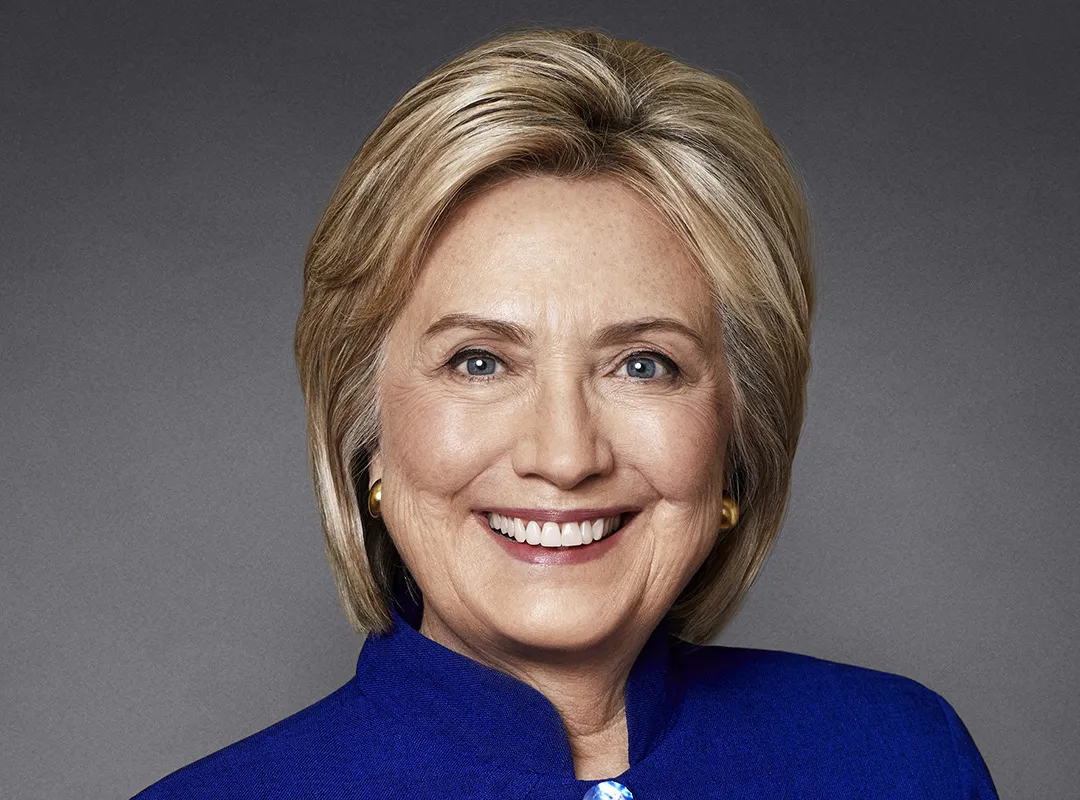 Photo: Hillary Clinton, via scaleglobalsummit.com
The breadth of that network is, by any honest accounting, extraordinary. From her years representing New York in the United States Senate to her tenure as Secretary of State to the sprawling infrastructure of her 2008 and 2016 presidential campaigns, Clinton operated at every stage as something more than a candidate or official. She functioned as an institution — one that trained, elevated, and launched an entire generation of progressive Democratic leaders now shaping American policy at every level of government.
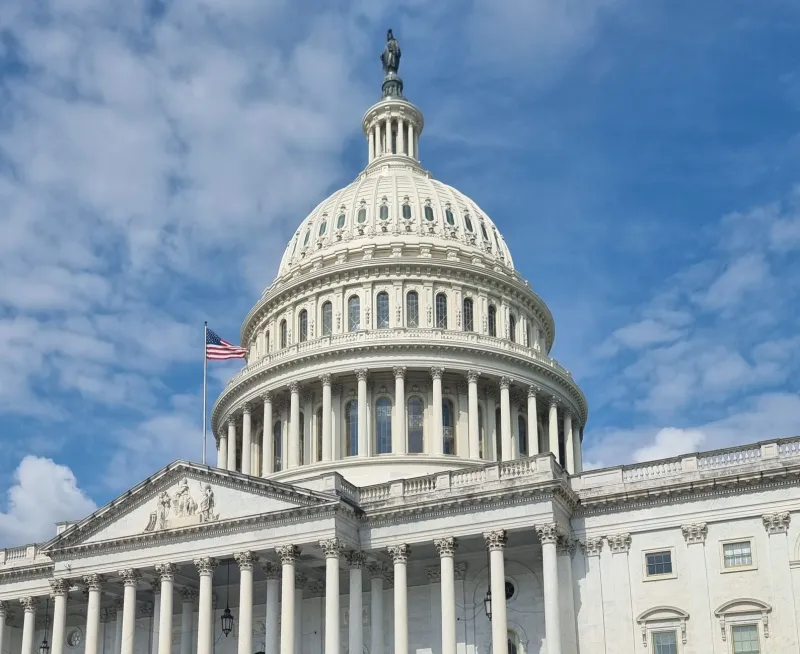
 Photo: United States Senate, via upload.wikimedia.org
The Senate Years: A Classroom in Constituent Service
When Clinton arrived in Washington as New York's junior senator in January 2001, she brought with her a governing philosophy that would define her staff culture: proximity to constituents is proximity to power. Her Senate office became known as one of the most rigorous training grounds on Capitol Hill, demanding not only policy fluency but a deep commitment to the unglamorous work of representation — casework, town halls, and the painstaking coalition-building that legislative victories require.
Staffers who passed through that office consistently describe an environment where ambition was encouraged and preparation was non-negotiable. Clinton held regular briefings in which junior staff were expected to engage substantively with policy details, not merely execute instructions. For many young women in particular, the experience of watching a pioneering senator navigate a male-dominated institution with both toughness and precision proved formative in ways that shaped entire careers.
Several former Senate staffers have since pursued their own electoral paths. The habits instilled in that office — constituent-first orientation, rigorous preparation, and the discipline to build durable coalitions — have traveled with them into their own campaigns and governing offices.
Foggy Bottom as a Leadership Incubator
If the Senate office was a classroom, the State Department under Secretary Clinton was a graduate school. Between 2009 and 2013, Clinton oversaw a department of roughly 70,000 employees across more than 270 diplomatic posts worldwide. The scale alone demanded a management philosophy that distributed authority and developed leadership at every tier of the organization.
 Photo: State Department, via i.pinimg.com
Clinton's emphasis on what her team termed "smart power" — the integration of diplomacy, development, and defense — required staff who could think across disciplines and build relationships across cultural and ideological divides. Those skills translate directly into effective domestic politics, and a notable number of former State Department officials have carried them back into American electoral life.
Beyond the professional development embedded in the work itself, Clinton made a point of investing personally in the careers of women serving in the department. She established mentorship structures, spoke candidly with female diplomats about navigating institutional barriers, and used her platform to normalize the presence of women in positions of significant foreign-policy authority. The downstream effects of that normalization are difficult to quantify but impossible to dismiss.
The 2016 Campaign as a Progressive Pipeline
The 2016 presidential campaign represented perhaps the single largest mobilization of progressive organizing talent in Democratic Party history. At its peak, the Clinton campaign employed thousands of field organizers, data analysts, communications professionals, and policy advisors spread across all fifty states. Many of them were young, many were women, and virtually all of them received training in the kind of data-driven, community-rooted organizing that now defines the operational standard for competitive Democratic campaigns.
The campaign's field operation was particularly consequential as a talent pipeline. Field organizers who spent 2016 turning out voters in battleground precincts went on to manage campaigns, run for office themselves, or build the state-level infrastructure that powered Democratic gains in subsequent election cycles. The organizational muscle developed during those eighteen months did not dissipate after Election Night — it dispersed into the broader progressive ecosystem, where it has been compounding ever since.
Several Democratic women now serving in Congress first entered serious political work through the 2016 campaign. Others used the networks, skills, and credibility they built during that campaign to launch successful bids for state legislative seats, county offices, and municipal positions — the very levels of government where long-term political careers are constructed.
Specific Threads in a Sprawling Web
The mentorship network Clinton built does not operate through a single formal institution. It functions, rather, as a web of overlapping relationships, shared experiences, and mutual investment that stretches from Washington to state capitals to city halls across the country.
In the House of Representatives, Democratic women with direct ties to Clinton's Senate staff, State Department service, or campaign operations have become some of the chamber's most effective legislators. Their fluency in both policy substance and political strategy — a combination Clinton modeled throughout her career — distinguishes them as leaders capable of translating progressive vision into legislative reality.
At the state level, the influence is equally pronounced. Former Clinton campaign organizers have won seats in state legislatures from Nevada to Pennsylvania, bringing with them the data literacy and constituent-engagement discipline that Clinton's operations prioritized. In several states, these former campaign alumni now occupy committee chairmanships and leadership positions, exercising influence over legislation that affects millions of Americans.
At the local level — city councils, school boards, county commissions — the network extends further still. These are the offices where political careers begin and where the values instilled through Clinton's mentorship first find institutional expression.
The Deliberate Architect
What distinguishes Clinton's approach to mentorship from the informal patronage that has always existed in politics is its intentionality. Clinton did not simply hire talented people and allow proximity to do its work. She actively invested in the development of her staff, created structures that rewarded preparation and ambition, and used her platform to advocate publicly for the advancement of women and progressive leaders across the party.
That intentionality reflects a governing conviction Clinton has articulated throughout her public life: that individual achievement, however significant, is insufficient. Durable progress requires institutions, pipelines, and networks — the architectural infrastructure through which values and capabilities are transmitted across generations.
By that measure, the most enduring dimension of Hillary Clinton's political legacy may not be any single piece of legislation or diplomatic achievement. It may be the sprawling, still-expanding network of leaders she trained, elevated, and sent into arenas she had prepared them to enter — and, increasingly, to win.
The work of that network is ongoing. The elections are still being contested. The legislation is still being drafted. The mentorship, in many cases, continues. And the progressive vision that animated Clinton's own career is finding new expression in the careers of the leaders she helped shape — planted in purpose, and growing still.