Corridors of Care: Inside the Shadow Infrastructure Democratic Women Built to Protect Abortion Access Across America
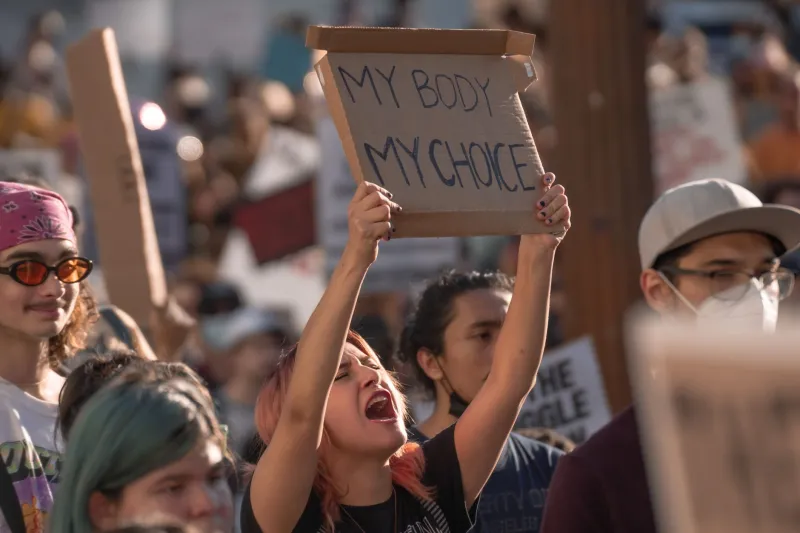
When the Law Closes a Door, Women Build a New One
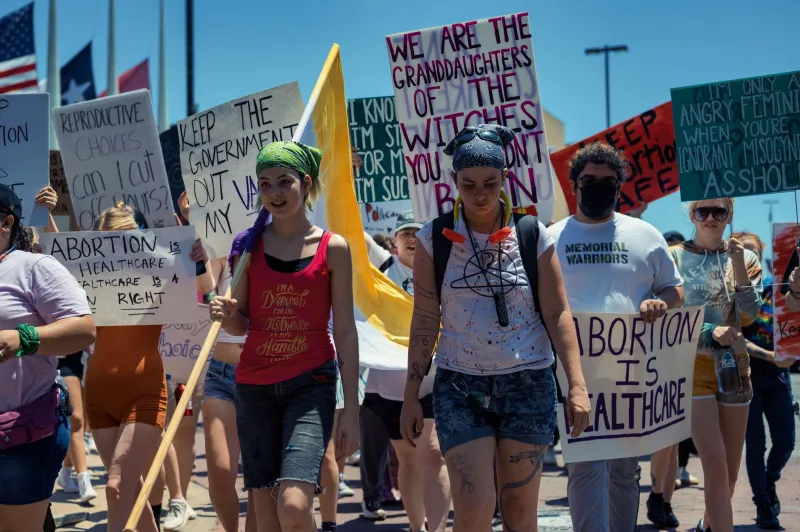
The Supreme Court's Dobbs decision did not simply overturn a constitutional precedent. It issued a challenge — one that millions of Democratic women accepted without hesitation. Within weeks of the June 2022 ruling, a distributed, largely informal network of organizers, clinic workers, attorneys, and everyday citizens began constructing what has since become one of the most consequential grassroots infrastructures in modern American political history.
This is not a single organization with a headquarters and a press secretary. It is a living web of mutual aid funds, encrypted communication channels, volunteer driver networks, and legal defense coalitions — built by women, sustained by women, and designed to outlast whatever restrictions any state legislature attempts to impose.
The Mechanics of Mutual Aid
At the operational core of this network are the abortion funds — organizations that existed before Dobbs but have expanded dramatically in its aftermath. Groups like the National Network of Abortion Funds and its affiliated state chapters have seen donation volumes multiply several times over since 2022. But the more revealing story lies not in the dollars raised, but in how those dollars move.
In states where abortion remains legal, clinic networks have developed intake systems that identify patients traveling from restricted states and connect them with financial assistance within hours of an initial inquiry. Case managers — many of them volunteers recruited through Democratic women's organizing circles — coordinate hotel accommodations, childcare coverage, and follow-up medical appointments with the precision of a small logistics firm.
"We are essentially running a parallel healthcare system," one coordinator in Illinois told a progressive organizer who shared the account at a recent Democratic women's summit. "The difference is that ours actually reaches the people who need it."
The Transportation Web
Perhaps the most operationally complex component of this emerging infrastructure is the transportation coordination network. In states bordering abortion-hostile jurisdictions — Illinois, New Mexico, Colorado, and Kansas among them — volunteer driver programs have proliferated with remarkable speed.
These programs operate through layered structures deliberately designed to minimize legal exposure. Drivers are typically briefed by volunteer attorneys on the current state of shield laws — legislation passed in states like California, New York, and Massachusetts that explicitly protects residents from civil or criminal liability for assisting in out-of-state abortions. Legal safe havens are no longer theoretical; they are active, tested components of a functioning system.
The legal architecture supporting this network reflects a sophisticated understanding of constitutional federalism. Democratic state attorneys general have issued formal guidance clarifying the limits of other states' reach. Clinics operating near state borders have restructured intake protocols in consultation with civil liberties organizations. The goal, as one reproductive rights attorney described it, is to ensure that "every step a patient takes is documented, defensible, and legally protected."
From Crisis Response to Political Strategy
What began as emergency infrastructure is rapidly evolving into something with far deeper political implications. The women building these networks are not simply providing healthcare access — they are generating an organizing model that Democratic strategists are watching with intense interest ahead of 2026.
The operational discipline required to run a cross-state mutual aid network — the volunteer recruitment, the donor cultivation, the legal coordination, the communications security — translates directly into the competencies needed to run a competitive congressional campaign. Many of the women most deeply embedded in this infrastructure are themselves candidates, campaign managers, or precinct captains.
In Arizona, a mutual aid coordinator who spent eighteen months building a transportation network across three counties subsequently organized one of the most effective voter registration drives in the state's recent history. In Wisconsin, a network of attorneys who volunteered legal support for patients traveling from neighboring states formalized their collaboration into a political action committee focused on state judicial races.
The pipeline from reproductive care organizer to electoral operative is not accidental. It is, increasingly, deliberate.
The 2026 Dimension
Democratic strategists are beginning to recognize what these networks already understand intuitively: the infrastructure of care is also infrastructure of political power. The volunteers who staff a mutual aid hotline on a Tuesday afternoon are the same people who will knock doors in October 2026. The donors who fund a transportation network are the same donors who will max out to a reproductive rights champion running for state senate.
Hillary Clinton's long-standing argument — that reproductive rights are inseparable from economic security, political participation, and democratic governance — finds its most concrete expression in the architecture these women are building. The network is not merely a response to Dobbs. It is a demonstration of what organized women can accomplish when they treat a political crisis as an organizing opportunity.
What Comes Next
The women sustaining this infrastructure are clear-eyed about the challenges ahead. Several states have introduced or passed legislation targeting abortion funds directly, attempting to classify financial assistance as criminal facilitation. The legal battles over shield laws remain unresolved in key jurisdictions. And the sheer scale of need — hundreds of thousands of patients affected annually — strains even the most well-resourced networks.
But the organizers building these corridors of care are not deterred. They are, if anything, more determined. They have constructed something that did not exist three years ago: a functioning, legally sophisticated, politically connected network that provides real services to real people while simultaneously building the organizational muscle that will define Democratic electoral strategy for the next decade.
In the face of the most significant rollback of reproductive rights in half a century, Democratic women did not simply protest. They built. And what they have built is already reshaping the terrain of American democracy.