Statehouse Sentinels: How Democratic Women Are Enshrining Reproductive Rights Into Law, One State at a Time
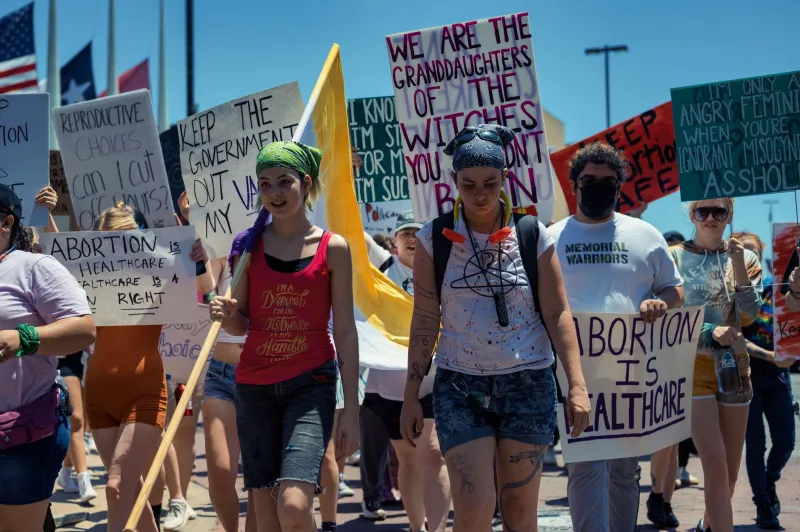
When the Supreme Court handed down its ruling in Dobbs v. Jackson Women's Health Organization in June 2022, it did not simply overturn Roe v. Wade. It transferred the battleground for reproductive rights to fifty separate arenas — each with its own rules, its own power dynamics, and its own political vulnerabilities. What the Court's conservative majority may not have fully anticipated was the formidable force waiting to meet them in those arenas: a generation of progressive women state legislators who had been preparing for exactly this fight.
The two years that have followed represent one of the most consequential periods of state-level democratic activism in modern American history. And at the center of it, in statehouses from Lansing to Santa Fe, stands a network of women who have transformed grief and outrage into legislative architecture.
The Ballot Initiative as a Blunt Instrument
Perhaps no tactical innovation has proven more decisive in the post-Dobbs era than the strategic deployment of citizen ballot initiatives. In states where Republican-controlled legislatures moved swiftly to restrict or ban abortion access, progressive organizers recognized that the most direct path to protection ran not through the statehouse floor but directly to voters.
The results have been striking. Michigan voters approved Proposal 3 in November 2022, amending the state constitution to guarantee reproductive freedom. Ohio voters enshrined similar protections the following year, despite a last-minute Republican effort to raise the threshold for constitutional amendments. Kentucky, Kansas, and Montana — states that lean reliably conservative at the federal level — each delivered ballot results that defied the assumptions of national political analysts.
State Representative Laurie Pohutsky of Michigan, one of the architects of the Proposal 3 campaign strategy, has described the ballot initiative model as "democracy operating exactly as it was intended — bypassing legislative obstruction and returning the question directly to the people." Her coalition's approach, which combined hyperlocal canvassing with a digital outreach infrastructure built to engage younger voters, has since been studied and replicated in no fewer than seven other states.
Coalition Architecture: The Quiet Work Behind the Headlines
Beyond the ballot box, the most durable gains have come through the painstaking construction of legislative coalitions that can withstand the inevitable cycles of electoral change. In states where Democrats hold either chamber or the governorship, progressive women legislators have moved aggressively to codify protections into statute — understanding that what one legislature can undo, a constitutional amendment cannot.
Colorado State Senator Julie Gonzales has been instrumental in building a cross-caucus coalition that secured some of the nation's most comprehensive reproductive health protections. Her approach — which emphasizes constituent education, healthcare provider testimony, and economic framing that connects reproductive autonomy to workforce participation and poverty reduction — has provided a legislative template that advocates in Nevada, Minnesota, and Illinois have adapted for their own contexts.
Minnesota offers perhaps the most instructive case study. When Democrats secured a trifecta in 2022, the legislative caucus moved within months to pass the Protect Reproductive Options Act, eliminating a range of outdated restrictions and creating new statutory protections that go beyond what Roe originally guaranteed. The speed and comprehensiveness of that effort reflected years of preparation by women legislators who had been drafting model legislation long before Dobbs was decided.
The Executive Dimension
Governors and attorneys general have also emerged as critical nodes in the reproductive rights defense network. In states where legislatures remain hostile, Democratic women executives have used every available lever of executive authority — from issuing protective orders for providers serving out-of-state patients, to directing state agencies not to cooperate with cross-state investigations, to using discretionary prosecutorial authority to decline enforcement of restrictive statutes.
Governor Gretchen Whitmer of Michigan and Governor Katie Hobbs of Arizona have each demonstrated how executive power, wielded with precision and legal confidence, can create meaningful protective space even in the absence of legislative consensus. Their actions have drawn legal challenges, but they have also bought time — time for legislative coalitions to solidify, for ballot campaigns to mature, and for public opinion to continue its demonstrable shift toward reproductive rights protection.
The Electoral Feedback Loop
What has surprised even seasoned political observers is the degree to which these state-level fights have generated their own electoral momentum. Reproductive rights have consistently ranked among the top motivating issues for Democratic and independent women voters in every election cycle since 2022. Candidates who have led or visibly championed reproductive rights legislation have outperformed their partisan baselines in competitive districts with notable regularity.
This dynamic is already shaping candidate recruitment and messaging strategy for 2026. Progressive women who have established credible records on reproductive rights are being recruited for state legislative races, congressional seats, and statewide offices at historically elevated rates. The issue has become not merely a policy priority but a political identity marker — one that activates donors, volunteers, and voters in ways that few other issues can match.
The Long View
Hillary Clinton, who spent decades warning that the federal judiciary's composition would ultimately determine the fate of reproductive rights, has described the post-Dobbs state-level mobilization as "democracy's immune response" to an imposed crisis. Her observation captures something essential about this moment: the women leading these fights are not simply reacting to loss. They are building something more permanent and more structurally resilient than the judicial precedent that was taken from them.
The work is uneven, the victories incomplete, and the threats ongoing. But the women who have taken up this cause in statehouses across the country have demonstrated that the architecture of rights can be rebuilt — and that they possess both the skill and the determination to build it.