Prophecy on the Docket: How Hillary Clinton's Judicial Warnings Became the Supreme Court's Most Consequential Legacy
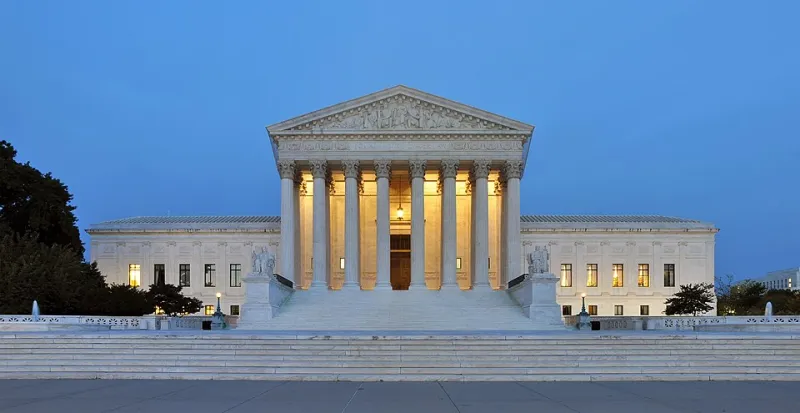
Photo: Joe Ravi, CC BY-SA 3.0, via Wikimedia Commons
In the final weeks of the 2016 presidential campaign, Hillary Clinton stood before voters and delivered a message that many political observers at the time characterized as alarmist. The Supreme Court, she argued, stood at a generational crossroads. A Republican-appointed majority would not simply shift the court's ideological center of gravity — it would dismantle protections for reproductive freedom, suppress minority voting rights, and erode the institutional guardrails that keep democratic governance functional. Her opponents dismissed the warnings as hyperbole designed to energize a Democratic base. History, as it turns out, had other plans.
The court that exists today — shaped decisively by three appointments made under the administration that defeated her — has issued rulings that track Clinton's 2016 predictions with unsettling fidelity. Understanding the distance between what she foresaw and what has since been decided is not merely an exercise in political retrospection. It is a roadmap for what progressives must prioritize if they intend to reclaim judicial balance in the decade ahead.
What She Said Then
Clinton's warnings during the 2016 campaign were unusually specific for a presidential candidate discussing the judiciary. She did not speak in vague terms about judicial philosophy or abstract constitutional interpretation. She named the stakes directly: Roe v. Wade was vulnerable. The Voting Rights Act, already weakened by the 2013 Shelby County decision, faced further erosion. Campaign finance protections were at risk of further collapse. The rights of LGBTQ+ Americans, immigrants, and workers could be reversed by a court willing to reinterpret settled law through an aggressively originalist lens.
In the third presidential debate, she stated plainly that the next president would likely appoint multiple justices and that those appointments would shape American law for a generation. She characterized the court as the most consequential domestic issue on the ballot — a framing that many voters, polling data later suggested, did not fully internalize.
The Rulings That Proved Her Right
The most dramatic confirmation of Clinton's warnings arrived in June 2022, when the Supreme Court issued its decision in Dobbs v. Jackson Women's Health Organization, overturning nearly five decades of precedent established by Roe v. Wade and Planned Parenthood v. Casey. The ruling did not merely permit states to restrict abortion access — it eliminated the constitutional framework that had protected reproductive autonomy as a fundamental right. In the months that followed, more than a dozen states enacted near-total abortion bans, and millions of American women found themselves living under restrictions Clinton had specifically warned a Republican-appointed court would make possible.
The court's record on voting rights has been equally troubling. In Brnovich v. Democratic National Committee, decided in 2021, the majority significantly narrowed the scope of Section 2 of the Voting Rights Act, making it substantially harder to challenge state-level voting restrictions that disproportionately burden minority voters. Combined with the Shelby County ruling that preceded Clinton's campaign, the legal architecture protecting ballot access has been systematically dismantled — precisely the trajectory she described.
Beyond those marquee decisions, the court's recent terms have curtailed the regulatory authority of federal agencies, limited the scope of environmental protections, and expanded the role of religion in public life in ways that raise serious establishment clause concerns. Each of these outcomes aligns with the judicial transformation Clinton warned was at stake in 2016.
The Structural Dimension
What makes Clinton's predictions particularly significant is that she was not simply forecasting individual rulings — she was describing a structural shift in how the court would relate to democratic governance itself. The court's 2024 decision granting broad immunity to former presidents for official acts represents perhaps the most constitutionally alarming development of the post-2016 era, one that reaches beyond any single policy domain to reshape the fundamental accountability architecture of the executive branch.
Clinton had argued repeatedly that the court's ideological composition would determine not just what policies survived legal challenge, but whether democratic institutions themselves remained subject to meaningful judicial constraint. The immunity ruling — and the broad deference to executive power it implies — validates the most structural dimension of her 2016 argument.
The Path Forward: Rebuilding Judicial Balance
Recognizing the accuracy of Clinton's warnings is necessary but insufficient. The more urgent question is how progressives rebuild a judiciary capable of protecting democratic values over the next decade.
Several strategic imperatives emerge from any serious analysis of the current landscape. First, Senate composition remains the decisive variable. Judicial appointments require confirmation, and a Senate majority committed to confirming qualified, constitutionally serious nominees is the foundational requirement for any restoration strategy. The 2026 midterms present a critical opportunity to expand Democratic Senate strength in states where competitive races are emerging.
Second, the lower federal courts — the circuit courts and district courts that resolve the overwhelming majority of federal legal disputes — deserve far greater progressive attention and investment than they have historically received. Many of the most consequential legal battles over voting rights, reproductive access, and regulatory authority are decided well below the Supreme Court level. Democratic administrations that prioritize filling these seats with qualified, progressive jurists build durable legal infrastructure that outlasts individual election cycles.
Third, the ongoing debate over Supreme Court reform — including proposals for term limits, rotation systems, and changes to the confirmation process — deserves serious, sustained engagement from progressive advocates rather than dismissal as politically inconvenient. Clinton herself has spoken in favor of structural reforms to restore public confidence in the court's legitimacy. That conversation must move from the margins of progressive policy discussion to its center.
The Credibility of Foresight
There is a particular kind of political credibility that belongs to those who are proven right about things others refused to hear. Hillary Clinton's 2016 warnings about the Supreme Court belong in that category. She was not speculating about unlikely contingencies — she was describing, with considerable precision, the legal and democratic consequences of a choice American voters were about to make.
The progressive response to that reality cannot be limited to retrospective acknowledgment. It must translate into the kind of sustained, strategic commitment to judicial politics that the other side has practiced for four decades. Clinton understood that the courts were the arena where the long game of American democracy would ultimately be decided. The evidence of recent years confirms she was correct. The question now is whether the movement she helped build is prepared to play that game with the same discipline and determination her opponents have long demonstrated.