Counsel for the Constitution: The Women Lawyers Who Are Building Democracy's Legal Firewall Against Election Denial
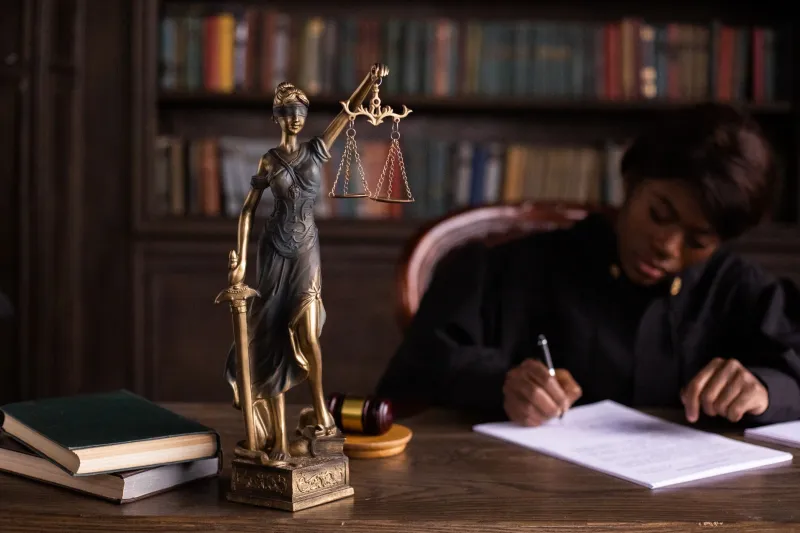
The assault on American democratic institutions in the years since 2020 has unfolded on multiple fronts simultaneously: in legislative chambers, in state executive offices, in the public square, and — with increasing sophistication and resources — in the courts. Against that legal offensive, a network of female civil rights attorneys has mounted a defense that is methodical, strategically coherent, and, by any fair accounting, more effective than its limited public profile would suggest.
These are not household names. They do not hold press conferences. Their victories appear in legal reporters and court dockets rather than on cable news chyrons. But the work they are doing — case by case, jurisdiction by jurisdiction, precedent by precedent — constitutes one of the most important ongoing efforts to preserve the structural integrity of American democracy.
The Landscape They Are Navigating
The legal terrain confronting voting rights advocates since 2013's Shelby County v. Holder decision — which effectively gutted the preclearance provisions of the Voting Rights Act — has grown progressively more hostile. The Supreme Court's subsequent decision in Brnovich v. Democratic National Committee in 2021 further narrowed the available legal theories for challenging voter suppression measures under Section 2 of the VRA. State legislatures in Georgia, Texas, Arizona, Florida, and elsewhere have passed wave after wave of restrictive voting legislation, each statute carefully designed to survive the legal standards that post-Shelby jurisprudence has established.
Against this backdrop, the attorneys fighting to protect voting rights have been compelled to innovate — developing new legal theories, identifying underutilized constitutional provisions, and building litigation strategies designed to succeed in a judicial environment that is considerably less sympathetic than the one that produced the landmark voting rights victories of the twentieth century.
Profiles in Legal Courage
Among the most consequential figures in this network is Danielle Lang, Senior Director of Voting Rights at the Campaign Legal Center. Lang has led or participated in major voting rights litigation in more than a dozen states, with a particular focus on challenges to restrictive voter registration requirements and absentee ballot rules. Her work on League of Women Voters of Florida v. Florida Secretary of State and related litigation has established important precedents regarding the obligations of state election administrators under federal law.
Lang describes the current litigation environment with characteristic precision: "The legal tools available to us have been deliberately narrowed by courts that have been skeptical of voting rights claims. Our job is to find every remaining avenue — state constitutional provisions, federal statutes beyond the VRA, equal protection doctrine — and use them with maximum strategic effect."
In Georgia, attorney Rahul Garabadu of the ACLU Voting Rights Project — working alongside a team that includes several female co-counsel — has pursued litigation challenging the sweeping provisions of Senate Bill 202, the 2021 law that imposed new restrictions on drop boxes, absentee voting, and the provision of food and water to voters waiting in line. While federal courts have delivered mixed results, the litigation has generated a detailed evidentiary record of the law's discriminatory impact — a record that may prove essential in future proceedings.
In Texas, Sophia Lakin of the ACLU has been central to challenges against a series of voting restrictions, including measures targeting mail-in ballot assistance and county-level administration of early voting. Her work has required navigating an exceptionally hostile federal circuit while identifying state constitutional arguments that offer independent avenues for relief.
The Redistricting Front
Beyond direct voter suppression litigation, the fight over electoral maps has consumed enormous legal resources and produced some of the most significant recent victories. The Supreme Court's 2023 decision in Allen v. Milligan, which held that Alabama's congressional map violated the Voting Rights Act by diluting Black voting power, represented a landmark win — one in which female attorneys played central roles both in the litigation itself and in the broader coalition of civil rights organizations that sustained the case through years of proceedings.
Deuel Ross of the NAACP Legal Defense Fund, who argued Allen v. Milligan before the Supreme Court, has described the decision as proof that Section 2 litigation, properly constructed and patiently pursued, can still deliver meaningful results even in the current judicial environment. The decision has already generated follow-on litigation in Georgia, Louisiana, and other states where voting maps are alleged to dilute minority representation.
Building Infrastructure, Not Just Cases
What distinguishes the most effective practitioners in this space is their understanding that individual cases, however important, are insufficient. The legal infrastructure required to defend democratic participation at scale requires institutional investment: training pipelines for new voting rights lawyers, coordinated litigation strategies across organizations, shared research and evidentiary resources, and sustained engagement with state-level legal battles that receive far less attention than federal proceedings.
Organizations including the Lawyers' Committee for Civil Rights Under Law, the Brennan Center for Justice, Demos, and the NAACP Legal Defense Fund have all invested in building this infrastructure — and women occupy leadership positions across each of these institutions. Their collaborative relationships, built over years of shared litigation, constitute an informal but highly functional legal network capable of mobilizing rapidly in response to new legislative threats.
The Connection to the Broader Progressive Project
The work of these attorneys connects directly to the values that have animated the progressive movement's approach to democracy since Hillary Clinton made voting rights and democratic protection a centerpiece of her 2016 platform. Clinton's warnings about the coordinated effort to restrict ballot access — dismissed by some at the time as partisan hyperbole — have proven prescient in ways that now seem almost understated.
The legal defenders of democracy are operating in the world that those warnings described. They are doing so with insufficient resources, against well-funded opposition, in a judicial environment that has been systematically reshaped to disadvantage their claims. And they are, against those odds, winning enough to matter.
What Is at Stake
The 2026 election cycle will unfold against a backdrop of continued legislative restriction, ongoing litigation, and a Supreme Court whose appetite for further narrowing voting rights protections remains uncertain but concerning. The attorneys profiled here will be central to determining whether the democratic process that produces that election is one that all Americans have a meaningful opportunity to participate in.
Their work deserves recognition, resources, and the sustained attention of everyone who believes that the right to vote is the foundation upon which all other rights depend. Democracy's legal firewall does not build itself. These women are building it, case by case, brief by brief, one hard-won precedent at a time.